
About the Hidalgo County District Clerk
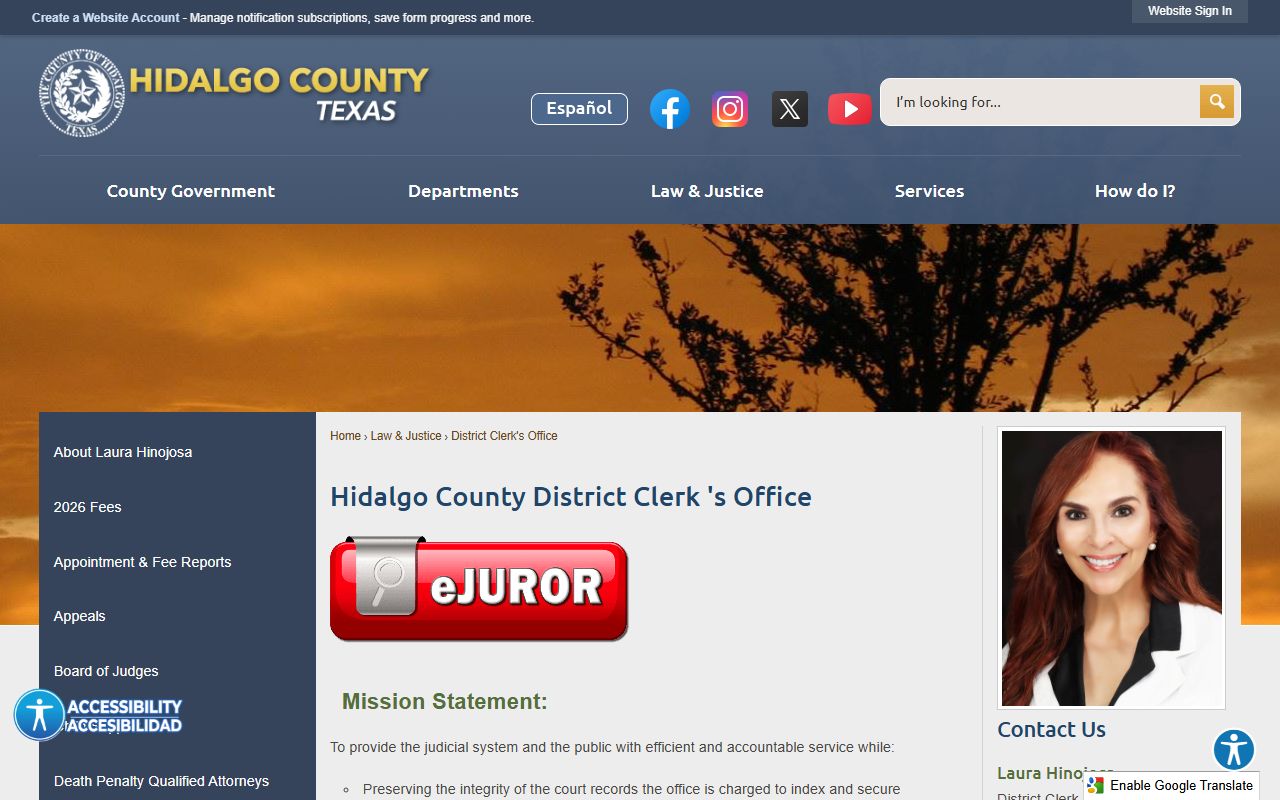
The District Clerk is an elected county official, and in Hidalgo County the office is held by Laura Hinojosa. The clerk's stated mission is to serve the judicial system and the public with efficient and accountable service while preserving the integrity of court records, managing fee collections, and keeping operations transparent. In practice, that means the office is the official custodian of every district court file in the county, and it is the gatekeeper for certified copies of those records.
The office sits in the main courthouse downtown and keeps standard weekday hours. It is the right place for district court matters, but not for county court or property records, which belong to the County Clerk. The card below gives the contact details for the Hidalgo County District Clerk.
Hidalgo County District Clerk
Clerk: Laura Hinojosa
100 N. Closner
Edinburg, TX 78539
(956) 318-2200
Fax: (956) 318-2251
Mon-Fri 8:00 a.m. to 5:00 p.m.
The District Clerk office page is shown below.
What the District Clerk Does in Hidalgo County
The District Clerk's work runs through the life of a district court case, from the first filing to the final order. The office files and stores pleadings, manages the court record, collects filing fees and court costs, and provides certified copies on request. It also keeps the forms litigants need and runs the online case search the public uses every day. The duties below capture the core of the job.
- Maintains district court records for civil, criminal, family, and juvenile cases.
- Provides copy requests by email, mail, and fax.
- Collects and safeguards filing fees and court costs.
- Keeps court forms, including copy requests and redaction forms.
- Runs the public records inquiry website for online case search.
Because the office handles juvenile and family files, some records carry access limits even though the clerk holds them.
How to Request a Certified Copy
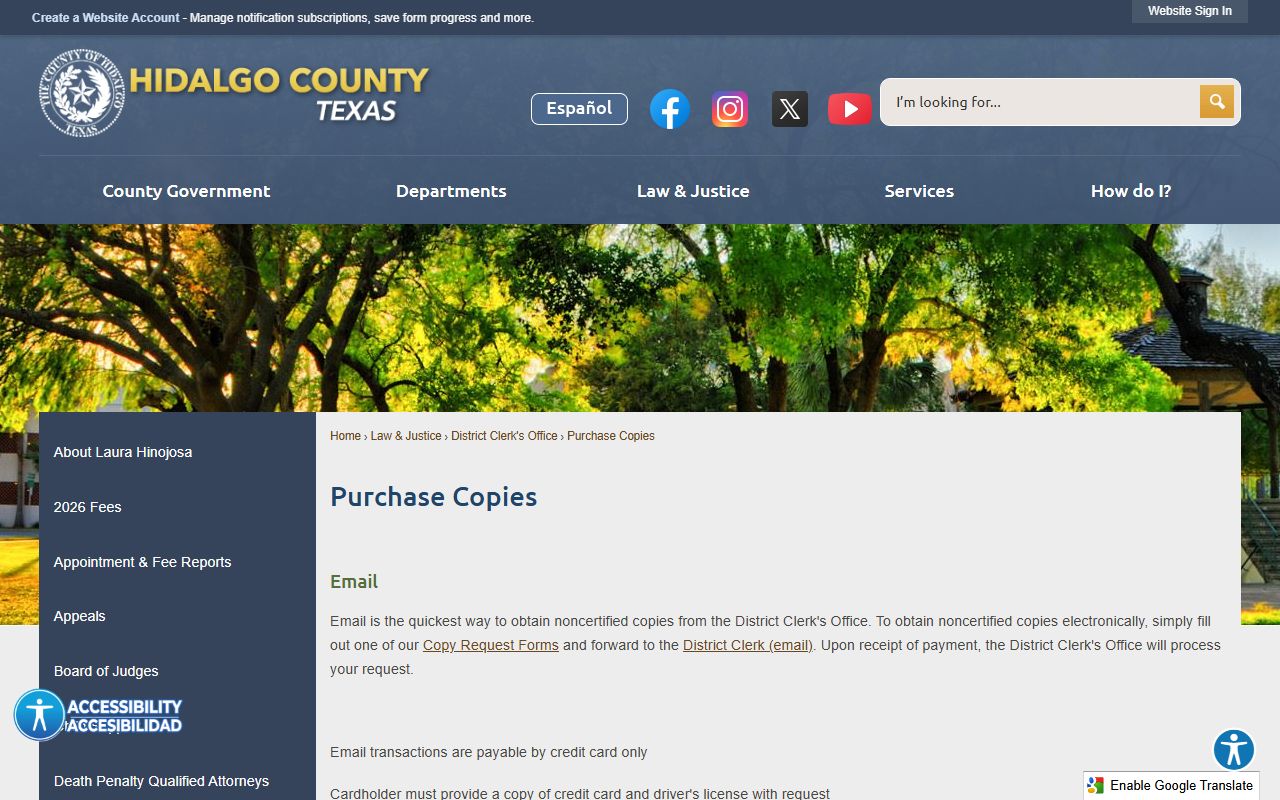
A certified copy carries the clerk's seal and is what courts, agencies, and other states accept as an official record. The online portal copy is informal and will not serve for those purposes. The District Clerk says email is the quickest method for noncertified copies, while certified copies can be mailed or held for will-call pickup. The steps below walk through a request.
- Identify the case number, or gather party names and the document you need.
- Complete the District Clerk copy request form.
- Submit it by email, mail, or fax with the required payment.
- Pay before processing; email and fax orders require a credit card.
- Pick up will-call copies within five days, or wait for mail with postage.
The District Clerk purchase copies page is shown below.
Copy Request Methods and Rules
The District Clerk sets a few rules that catch people off guard, so it helps to know them before you order. Email and fax transactions are payable by credit card only, and the cardholder must send a copy of the credit card and a driver license with the request. A convenience fee applies based on the purchase amount. Uncertified copies can be emailed or faxed, while certified copies are mailed with postage or placed in will-call for pickup within five days.
Timing can vary with the case. Disposed cases that were never imaged electronically may need to be shipped from storage, which can take more than 24 hours. For a mailed request, the office uses a post office box rather than the street address. Mail copy requests to Laura Hinojosa, Hidalgo County District Clerk, PO Box 87, Edinburg, Texas 78540. Planning around these rules keeps a request from stalling.
Records Request Form Fields
The copy request form gathers what the office needs to find the file and process payment. Giving complete details up front avoids a back-and-forth. The table below lists the key fields on a Hidalgo County District Clerk records request.
| Field | Required | Notes |
|---|---|---|
| Case Number | Helpful | Speeds the search; needed when names are common. |
| Party Names | Yes | The people or businesses in the case. |
| Document Type | Yes | What you want, such as a decree or judgment. |
| Number of Copies | Yes | And whether they must be certified. |
| Payment and ID | Yes | Credit card plus a copy of the card and driver license for email or fax. |
For online case searching before you order, use the court records tool.
Hidalgo County District Clerk Fees
The District Clerk charges for filings and copies, and the amounts are set by statute and the county schedule. Civil and family suits carry a base filing fee built from several components. Copies are priced by page. The table below lists representative District Clerk fees.
| Item | Amount |
|---|---|
| Civil suit base filing fee | $350.00 |
| Family suit base filing fee | $350.00 |
| Jury demand fee | $10.00 |
| Electronic copy, up to 10 pages | $1.00 |
| Each page over 10 | $0.10 |
The $350 base fee folds in components for the clerk fee, law library, records preservation, court reporter, security, facilities, alternative dispute resolution, jury, the appellate judicial system, and language access.
Common District Clerk Forms
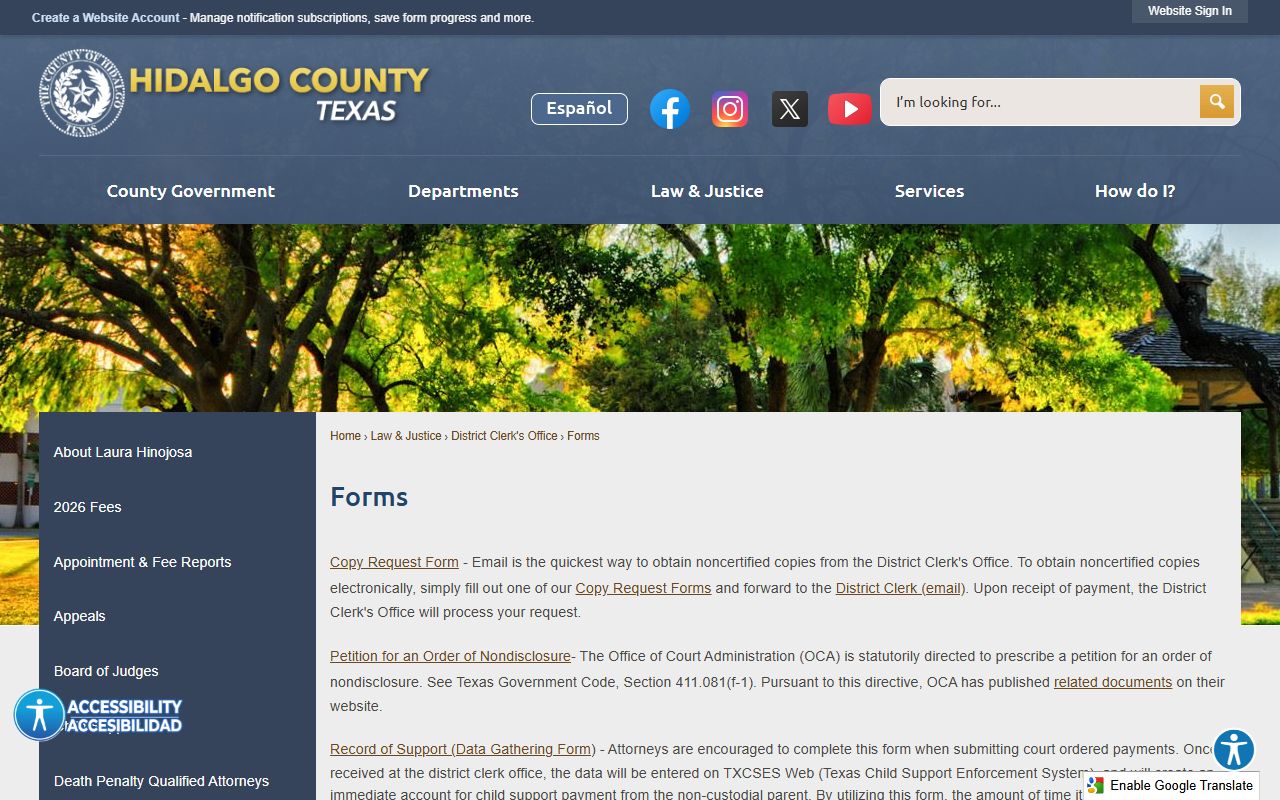
The District Clerk keeps a forms page for the requests people make most. These cover copies, record protection, and a few specialized petitions. The list below names the ones you are most likely to need.
- Copy Request Form for noncertified and certified copies.
- Petition for Order of Nondisclosure reference materials.
- Request to Redact a Social Security number from court documents.
- Record of Support and data gathering form for family cases.
- Application or Order to Unseal Adoption Records.
The District Clerk forms page is shown below.
District Clerk vs County Clerk
Texas splits clerk duties between two offices, and mixing them up is the most common reason a request lands in the wrong place. The District Clerk keeps district court files. The County Clerk keeps county court files, land records, and vital records. The chart below sorts the two.
| Records | District Clerk | County Clerk |
|---|---|---|
| Felony and large civil cases | Yes | No |
| Divorce and family district cases | Yes | No |
| Misdemeanor and county court cases | No | Yes |
| Deeds, marriage, and vital records | No | Yes |
For the other office, see the Hidalgo County Clerk page.
Online Records and Filing
The District Clerk launched the county's public records inquiry website in 2013, and it remains the free way to search district court cases online. The office's bulletins explain that the system lets the public view a register of actions for civil, family, and probate cases by case number, party name, attorney, or date range. It is the same portal that powers the case and docket searches across this site, though the office stresses that what it shows is unofficial.
For attorneys and parties, Texas uses electronic filing for most case types, and the clerk processes those filings into the official record. Members of the public who only need to read or copy a record do not need to e-file; they search online and then order copies. For the public-facing search, see the court records and court dockets pages.
Common Questions About the District Clerk
A few questions come up almost every time someone deals with the District Clerk for the first time. The short answers below cover them.
Is the District Clerk the same as the County Clerk?
No. They are separate elected offices with different records. The District Clerk keeps district court files, including felonies, large civil suits, and divorces. The County Clerk keeps county court files, land records, and vital records like marriage. A request aimed at the wrong office is simply sent back, so confirm which clerk holds the file first. The County Clerk page covers that office.
Can I file documents with the District Clerk online?
Texas uses electronic filing for most case types, and attorneys and parties file into the official record that way. Members of the public who only need to read or copy a record do not e-file. They search the case online and then request copies. The court records page explains the public search.
How long does a copy request take?
It depends on the case. Imaged records can be emailed quickly after payment, while a disposed case that was never imaged may need shipment from storage, which can take more than a day. Email is the quickest method for noncertified copies, and certified copies are mailed or held for will-call pickup within five days.