
How to Find Recently Released Hidalgo County Inmates
There is no standalone released-inmate page for the county, but you do not need one. The same Jail Records search that finds current inmates carries release-date fields. That means you can check whether and when a person left the county jail by adding a release-date range to your search. The tool is free and runs in the Hidalgo County Records Inquiry portal that the Sheriff's Office uses for inmate lookups.
Start with what you know, a name or a booking number, then layer on the release dates. If the trail goes cold, the person may have been transferred. The steps below set the order to follow.
- Search Jail Records by defendant name or booking number.
- Add a release-date on or after and on or before to find a known release window.
- Check Jail Bond Records if a posted bond drove the release.
- Call the Sheriff's Office or jail to confirm a time-sensitive status.
- If the person went to prison, switch to the state or federal locator below.
The jail search and its release fields are covered in full on the Hidalgo County inmate records page.
Using the Jail Records Release-Date Fields
The county jail search was built with release research in mind. Beyond the booking dates, it offers a Date Released On or After and a Date Released On or Before field. Pair those with the bond status filter, set to all, open, or closed, and you can narrow a search to a specific release period. A bond posted date range helps when the release came through a posted bond.
This approach works best when you already have a name or booking number. A broad search across a wide date range can return a long list. Add a middle name or a date of birth to trim it. Remember that online status can lag the jail's live count, so a very recent release may not show right away.
Setting Up Release Notifications with VINELink
If you want to know the moment a person is released, do not refresh a search all day. Use VINELink, the victim and public notification system. You register a phone number or email, search for the person, and ask for an alert. When custody status changes, the system reaches out. This is the standard way victims and families stay informed about a release without constant checking.
The VINELink notification system is shown below.
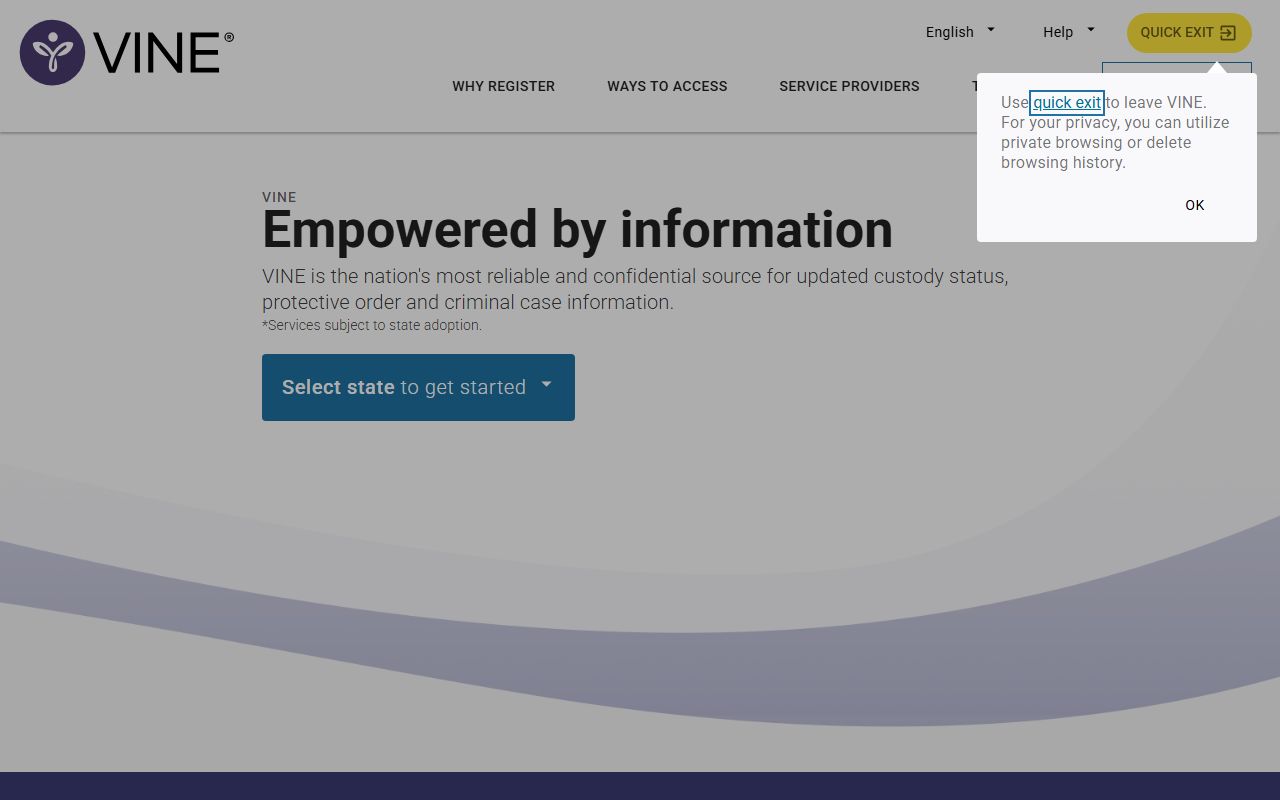
Search fields on VINELink vary by state and agency, but most accept a name or an offender ID to start the alert.
Searching State Released Inmates with TDCJ
A person sentenced to state prison leaves the county jail for the Texas Department of Criminal Justice. To find or confirm a state release, use the TDCJ offender search. It accepts a name or an ID and can show current status, which helps verify whether a person is still in state custody or has been released or paroled.
The TDCJ offender search is shown below.
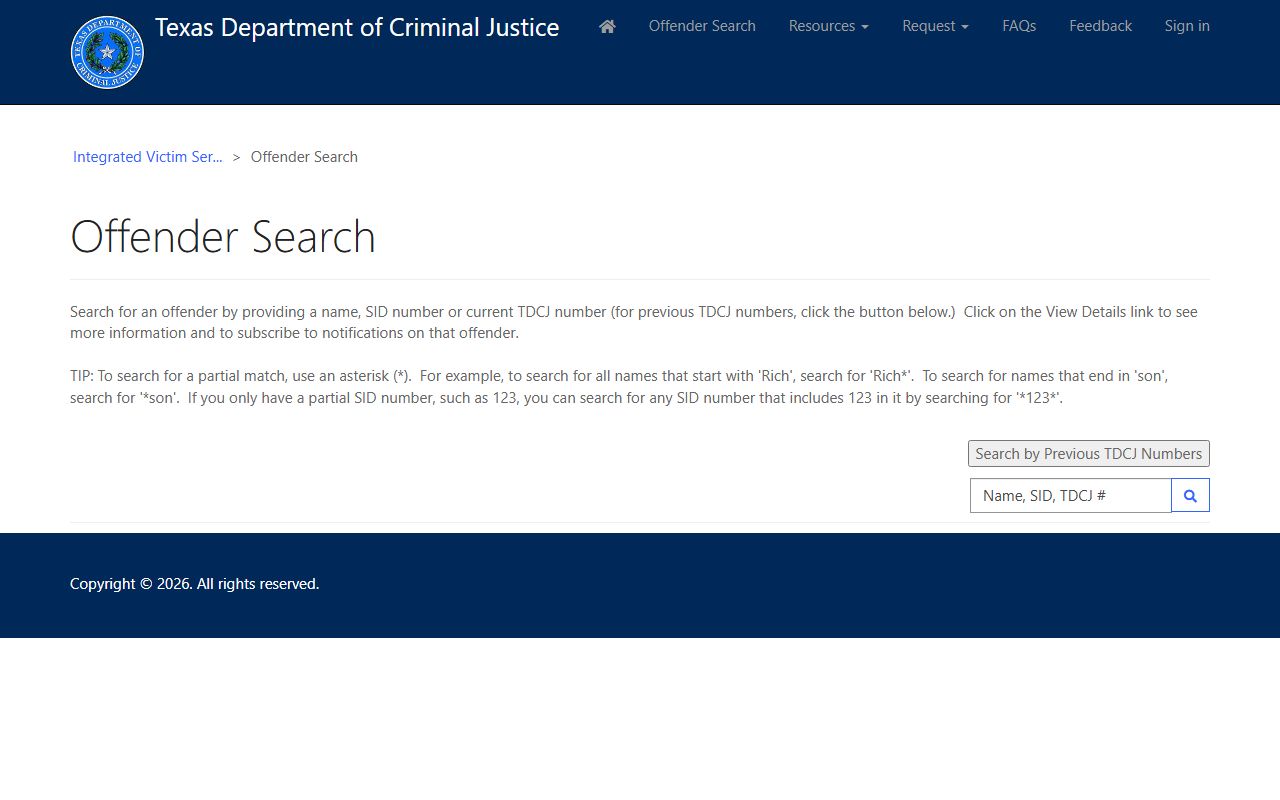
| Field Label | Type | Notes / Format |
|---|---|---|
| First / Last Name | Text | Primary search; asterisk wildcard for partial matches. |
| SID Number | Text | State identification number. |
| TDCJ Number | Text | Current TDCJ number. |
| Previous TDCJ Numbers | Button | Searches prior assigned numbers. |
Searching Federal Released Inmates with the BOP
Federal cases are common along the border, and a federal defendant is held by the Bureau of Prisons rather than the county. The BOP inmate locator searches current and past federal inmates back to 1982. It is the right tool when a Hidalgo County matter turns out to be federal or when a person has been moved into federal custody.
The Federal Bureau of Prisons inmate locator is shown below.
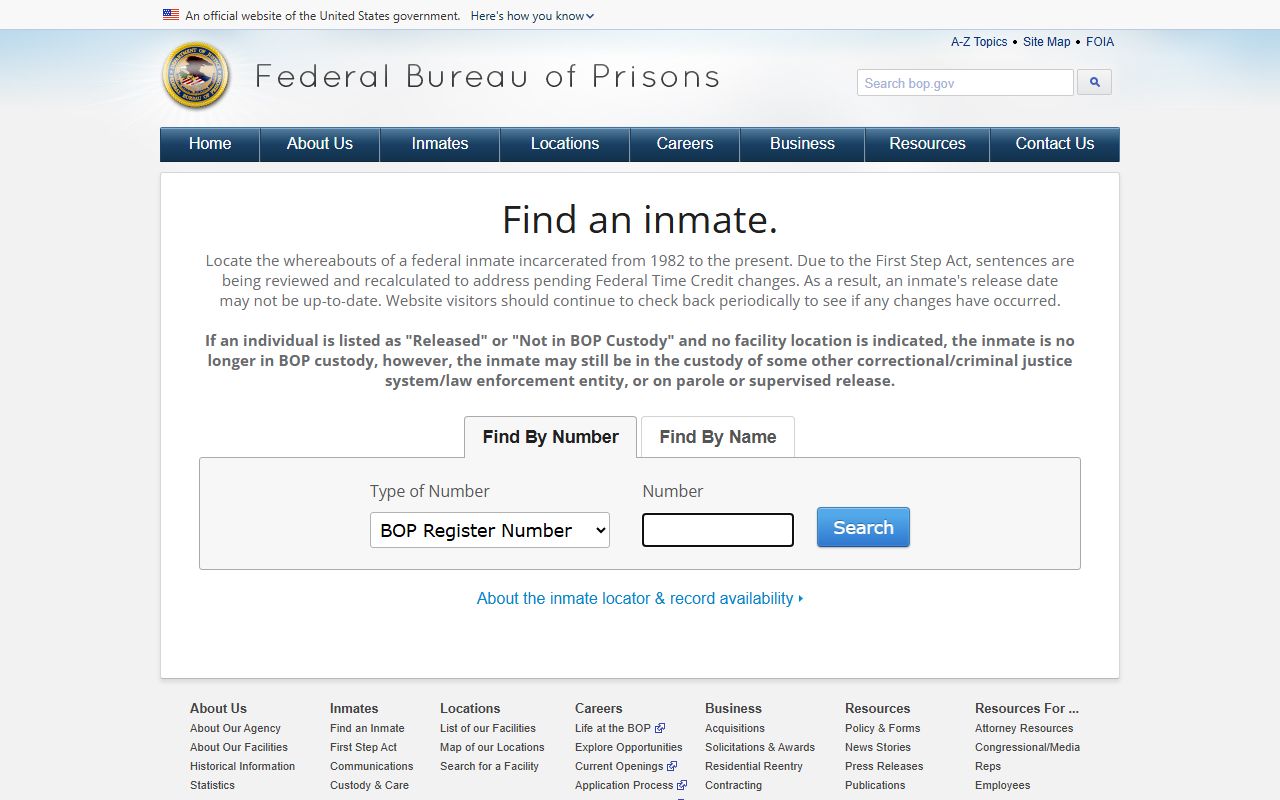
| Field Label | Type | Notes / Format |
|---|---|---|
| BOP Register Number | Text | Federal inmate register number. |
| DCDC / FBI / INS Number | Text | Other ID numbers accepted. |
| First / Middle / Last Name | Text | Name search. |
| Age, Race, Sex | Filters | Narrow a name search. |
Verifying a Release by Phone or in Person
Online data is a snapshot, not a live feed. For anything time-sensitive, a phone call beats a search. The Sheriff's Office and the adult detention facility can confirm a current status when minutes matter. Use the contact below to verify a Hidalgo County release directly.
Hidalgo County Sheriff's Office
711 El Cibolo Rd.
Edinburg, TX 78541
(956) 383-8114
Mon-Fri 8:00 a.m. to 5:00 p.m.
Note: Have the person's full name and date of birth ready, since the jail uses those details to confirm a record.
The Texas Sex Offender Registry
Some releases come with a registration duty. Under Texas law, many adult and juvenile sex offenders must register, and most of that information is public. The Texas DPS public registry lets you search by name or address. DPS says registration includes the person's name, address, a color photograph, the offense, and other details.
The Texas DPS public sex offender registry is shown below.
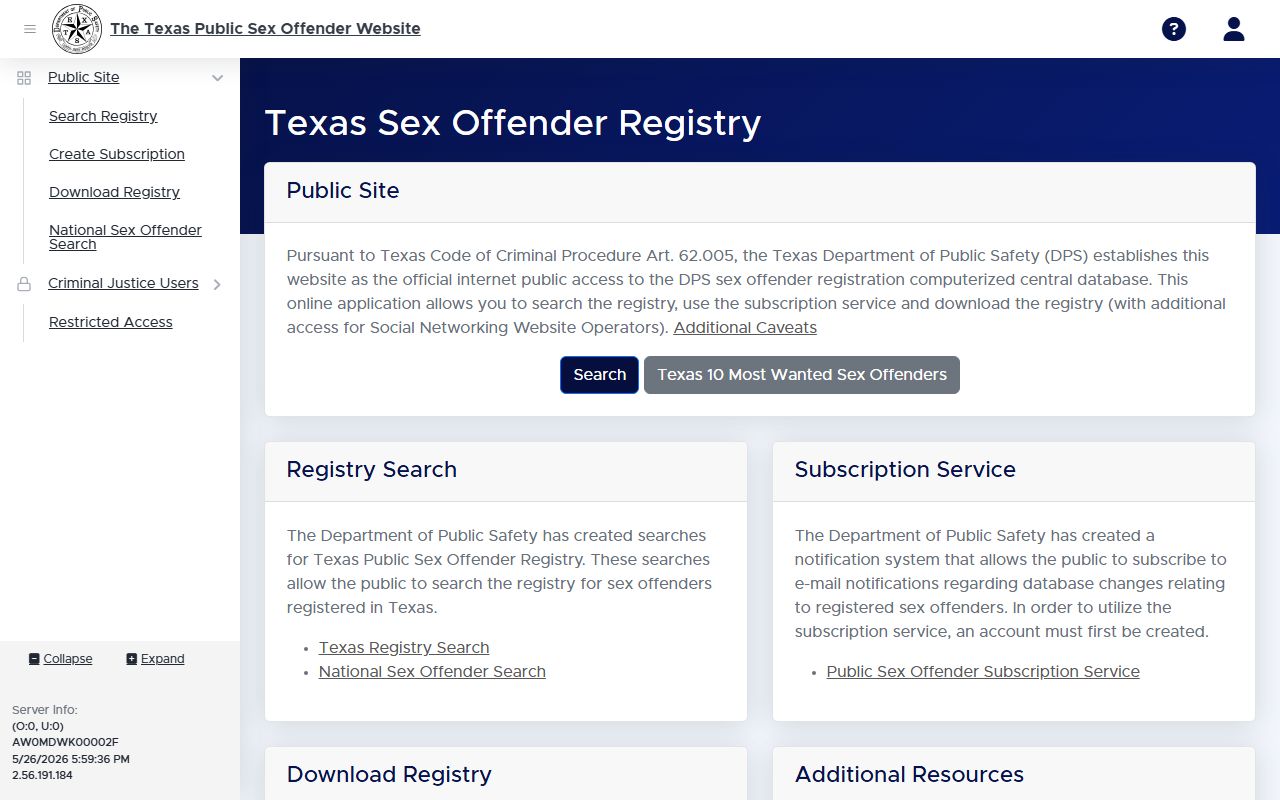
| Field Label | Type | Notes / Format |
|---|---|---|
| Name | Text | Search a registrant by name. |
| Address / ZIP | Text | Search by location to see nearby registrants. |
| Result Detail | Display | Name, address, photo, and offense. |
Parole and Probation After Release
A release from custody does not always mean a clean break from supervision. A person paroled from state prison stays under the Texas parole system until the sentence is fully discharged. A person on community supervision, often called probation, reports to a local officer and follows court conditions. Both can carry rules about travel, contact, and check-ins, and a violation can send a person back into custody.
Supervision status is one reason an online release date does not tell the whole story. A person may be out of the jail yet still on parole or probation. For the case behind the supervision, the court records search shows the conviction and conditions, and the arrest records page covers the front end of the process.
Which Custody System Holds a Released Inmate
Finding a release is easier once you know which system held the person, because the county jail, the state prison system, and the federal prison system each keep their own records and their own search tools. A person held before trial or serving a short county sentence stays in the Hidalgo County jail, so the county roster and its release-date fields are the place to look. A person convicted of a felony and given a prison term moves to the Texas Department of Criminal Justice, where the state offender search takes over. A federal defendant, common in a border county, is held by the Bureau of Prisons and tracked through the federal locator.
The path of a case usually tells you where to search. A dismissed or bonded case ends at the county level. A state prison sentence points to TDCJ. A federal charge points to the BOP. Holds and detainers can complicate things, since another county, the state, or a federal agency such as immigration can place a hold that delays a release even after a local bond is posted. When the trail is unclear, start with the county jail search, then move outward to the state and federal tools until the record turns up.
Common Questions About Released Hidalgo County Inmates
A handful of questions come up again and again when people try to confirm a release. The short answers below cover the most common ones and point you to the right tool.
Does Hidalgo County publish a released-inmate list? No. There is no standalone released list, but the jail search carries release-date fields that let you confirm when a person left county custody. The inmate records page explains the full search.
How fast does a release show online? Not always right away. Online status can lag the jail's live count, so a very recent release may not appear for a while. For a time-sensitive answer, call the Sheriff's Office or the detention facility.
What if the person went to prison? Switch tools. Use the TDCJ offender search for state custody and the BOP locator for federal custody. For an alert when status changes, register with VINELink. More answers sit on the FAQ.
Legal Help for People Leaving Custody
The legal questions that follow a release rarely solve themselves, and the right help can change the outcome. People who still face charges may qualify for the Hidalgo County Public Defender, whose office represents indigent defendants from the time charges are filed through the final appeal. A person who is unsure about their status can ask the county indigent defense office whether they meet the financial test for appointed counsel. That matters because a missed hearing or an unresolved charge can lead back to custody.
For civil and procedural questions, self-help resources fill the gap. The Texas State Law Library publishes guides on court records and on expunction and nondisclosure, and regional legal aid serves the Rio Grande Valley, though you should confirm a current local contact before relying on it. These tools help a released person understand parole rules, clear an eligible record, or sort out a related court matter. The court records and arrest records pages explain the case files that often need attention after release.
Reentry, Record Clearing, and Civil Rights
Life after release brings legal questions. In Texas, voting rights are restored once a felony sentence is fully discharged, including any parole or supervision. Eligible people may also pursue an expunction under Code of Criminal Procedure Chapter 55 or a nondisclosure order under Government Code Chapter 411 to clear or seal a qualifying record. Driver license and firearm rights depend on the conviction and on state and federal limits.
For self-help, the Texas State Law Library guides and regional legal aid serve the Rio Grande Valley, though you should confirm a current local contact before relying on it. To check for any open warrant that could complicate reentry, use the warrant records page. More common questions sit on the FAQ.