
Where Hidalgo County Marriage and Divorce Records Live
The first thing to sort out is which office holds the record you want. The two are not the same. The County Clerk, Arturo Guajardo Jr., issues marriage licenses and keeps marriage records as part of the vital records function. A divorce is a court case, so it lives with the court that heard it and with the District Clerk who keeps district court files. Knowing this split saves a wasted trip.
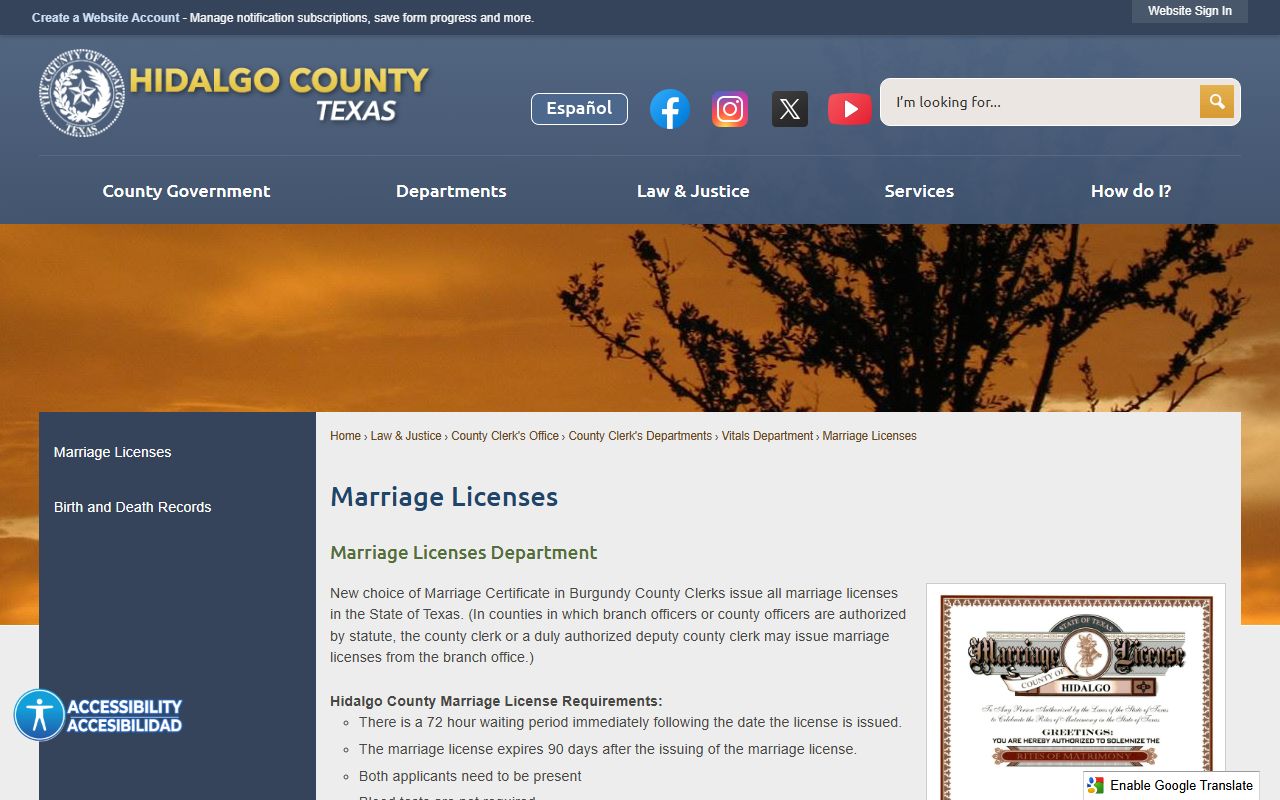
For a marriage record or a new license, you deal with the County Clerk. For a divorce decree or a pending divorce case, you search the court records and request certified copies from the District Clerk. The County Clerk marriage license page lays out the requirements. The Hidalgo County marriage license page is shown below.
Marriage License Requirements in Hidalgo County
Texas sets clear rules for a marriage license, and the County Clerk applies them. Both applicants must appear in person before the clerk. There is a 72-hour waiting period right after the license is issued, and the license expires 90 days after issuance. Blood tests are not required. The clerk may not issue a license if either applicant is under 18 without a Texas court order removing the disabilities of minority.
Each applicant must show proof of identity and age, and all documents must be an original or a certified copy. Plan to apply together and early enough to clear the 72-hour wait before the ceremony. The license must be used within the 90-day window, then returned and recorded through the County Clerk after the wedding.
Accepted Identification
The County Clerk accepts several forms of proof for identity and age. Bring an original or certified document, not a photocopy. Any of the items below can work.
- Birth certificate.
- Driver license or state ID card.
- Military ID or U.S. passport.
- Certificate of citizenship or naturalization.
- Resident alien card, border crossing card, or Matricula Consular.
If an applicant is a minor, the clerk needs a Texas-filed court order removing the disabilities of minority before a license can issue.
How to Apply for a Marriage License
Applying is straightforward once both people can appear together. The steps below follow the County Clerk's process from start to ceremony.
- Confirm both applicants can appear in person before the County Clerk.
- Bring an original or certified proof of identity and age for each person.
- Pay the license fee; a Twogether in Texas certificate lowers it.
- Observe the 72-hour waiting period unless a lawful exception applies.
- Hold the ceremony within 90 days, before the license expires.
- Return the executed license to the County Clerk to be recorded.
The Twogether in Texas premarital course is the main way couples cut the cost, and it also waives the wait in many cases.
What the Marriage License Application Asks For
The application gathers the basics for each applicant and confirms eligibility. The table below sums up what the County Clerk expects when you apply for a Hidalgo County marriage license.
| Item | Required | Notes |
|---|---|---|
| Both applicants present | Yes | Each must appear before the clerk. |
| Proof of identity | Yes | Original or certified ID document. |
| Proof of age | Yes | Minors need a court order removing disabilities of minority. |
| Fee payment | Yes | Reduced with a Twogether in Texas certificate. |
| Blood test | No | Not required in Texas. |
For the office that handles all of this, see the Hidalgo County Clerk page.
Hidalgo County Marriage License Fees
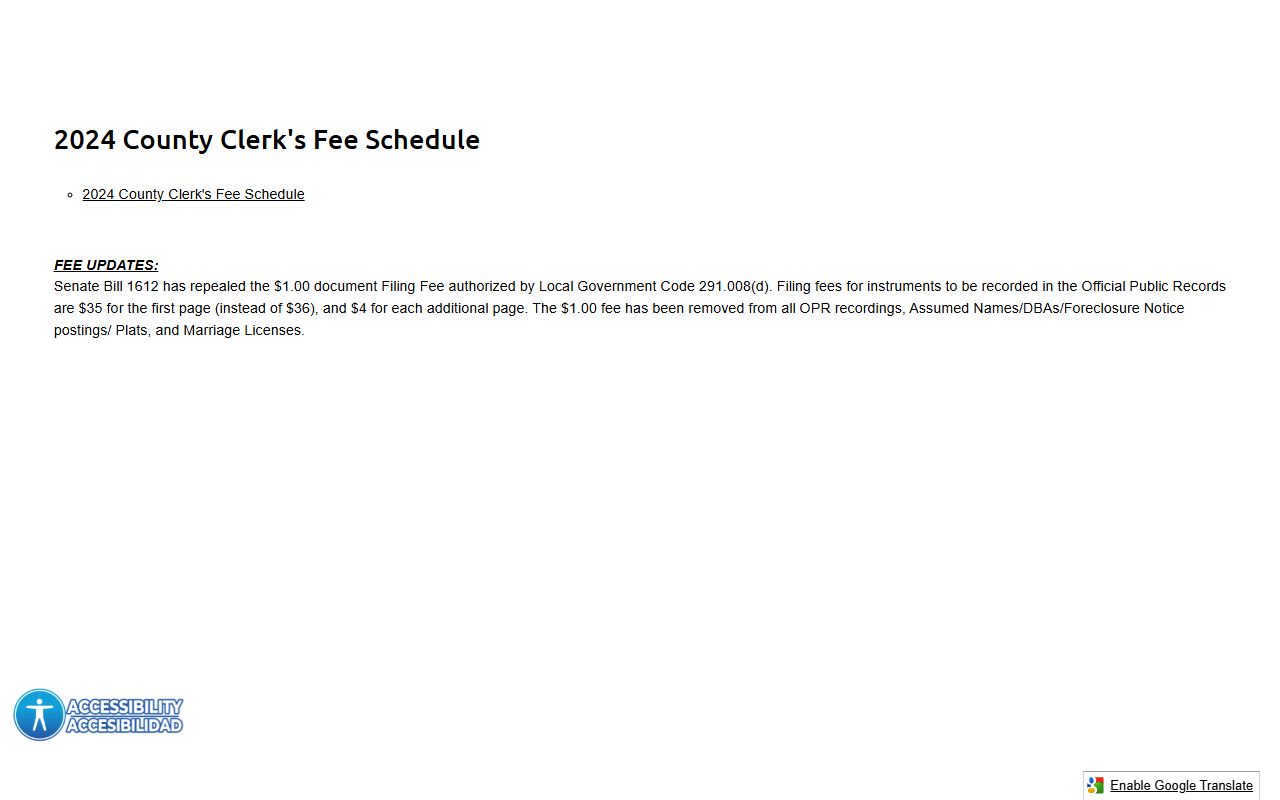
The County Clerk publishes the fees, and they shift a bit by license type. A premarital course brings the standard fee down sharply. The table below lists the marriage fees on the County Clerk schedule.
| Item | Amount |
|---|---|
| Marriage license | $81.00 |
| Marriage license with Twogether in Texas certificate | $21.00 |
| Informal marriage license | $46.00 |
| Marriage license certified copy | $16.00 |
| Additional certified copies | $6.00 |
The County Clerk fee schedule is shown below.
Certified Marriage Copies and Vital Records
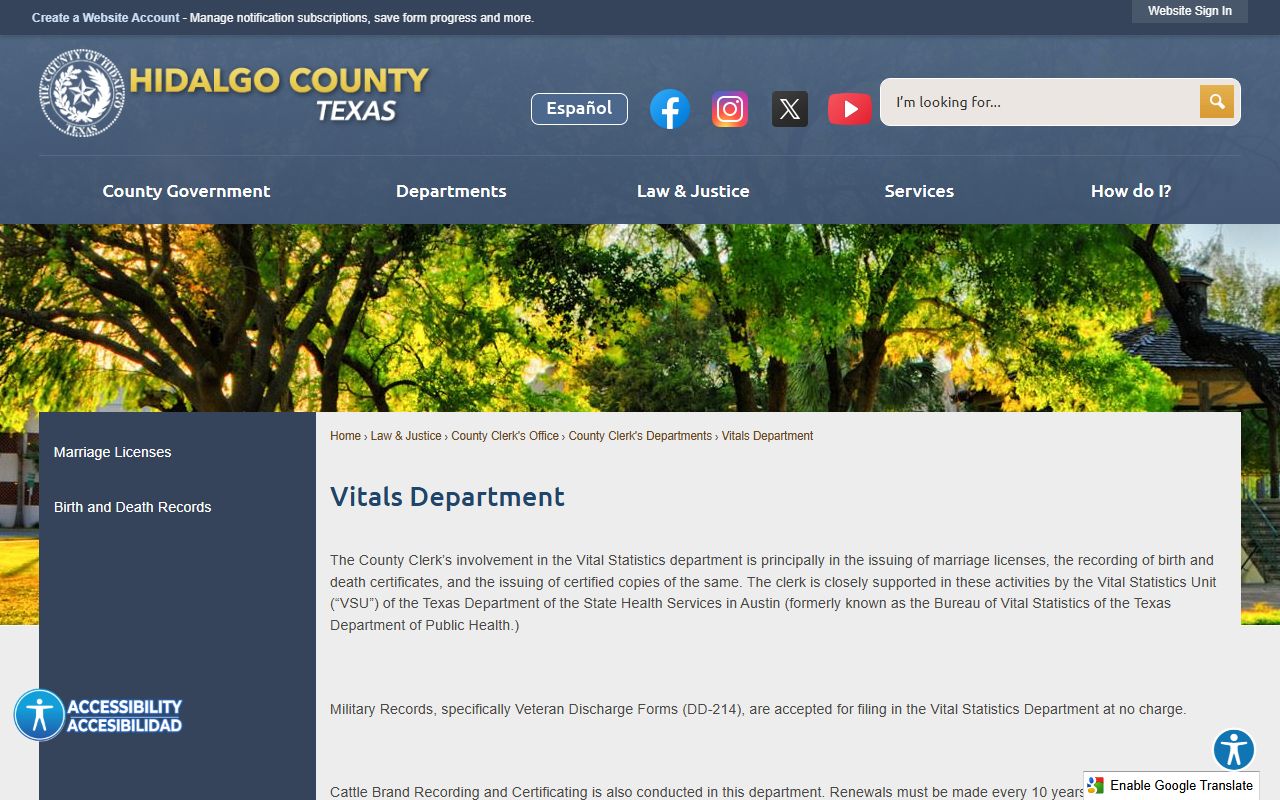
After a wedding, you may need a certified copy of the marriage license for a name change, benefits, or immigration. The County Clerk sells certified copies through its vitals department. A certified marriage license copy costs $16, with extra copies at $6 each. The vitals department also handles birth and death records, DD-214 veteran discharges, and cattle brands.
The County Clerk vitals department page is shown below.
Divorce Records Through the District Clerk
Divorce is a different track entirely. A divorce is a family law case filed in a district court, so the District Clerk keeps the file, not the County Clerk. You search divorce cases in the Records Inquiry portal under the civil, family, and probate lane, by case number, party name, attorney, status, or filing date where available. Online copies are unofficial.
For a certified divorce decree, you request it from the District Clerk rather than printing the online version. Texas divorce involves filing in a court with proper venue, serving the other party or getting a waiver, a waiting period, and a final decree. Issues like children and property follow the Texas Family Code. For the office and copy process, see the District Clerk page, and to search the case, use the court records tool.
Informal Marriage and Recording the License
Texas recognizes more than the standard ceremony, and the County Clerk reflects that. An informal marriage license, sometimes tied to common-law marriage, is available at a lower fee than the standard license. Couples who qualify can declare an informal marriage through the clerk, which creates an official record of the relationship. The clerk's fee schedule lists this option separately from the standard and the Twogether in Texas rates.
Recording the license is the step many couples forget. After the ceremony, the person who performs it completes the license, and it must be returned to the County Clerk to be recorded. Only once it is recorded does the county hold an official marriage record that you can later request as a certified copy. If a license expires unused after the 90-day window, it cannot be revived, and the couple must apply again. Keeping track of the dates and returning the signed license on time protects the record you will need down the road.
Common Questions About Marriage and Divorce Records
A few questions come up almost every time someone looks into these records. The short answers below should save you a phone call.
How long is the wait for a marriage license? There is a 72-hour waiting period after the license is issued, and the license expires 90 days later. A Twogether in Texas premarital course can waive the wait in many cases and also lowers the fee.
Where do I get a certified marriage copy? From the County Clerk's vitals department. A certified marriage license copy is $16, with extra copies at $6 each. See the County Clerk page for the office details.
How do I find a divorce decree? Search the civil, family, and probate lane of the court portal, then request a certified copy from the District Clerk. Many divorce files are limited online. The court records page covers the search, and more answers sit on the FAQ.
Marriage Records and Name Changes
A certified marriage record is the document that lets many other changes happen. After a wedding, a spouse who takes a new name usually needs a certified copy of the marriage license to update a Social Security card, a driver license, a passport, and bank or benefit accounts. The portal printout will not do for those agencies, since they want the certified copy with the County Clerk's seal. That is why ordering one or two certified copies early can save a return trip.
Divorce can also drive a name change, but it works through the court instead of the clerk's vital records. A divorce decree can restore a former name, and the certified decree from the District Clerk is the proof agencies accept. So the office you visit depends on the event: the County Clerk for the marriage record, the District Clerk for the divorce decree. For the office that handles certified divorce copies, see the District Clerk page.
Why Divorce Cases May Not Be Online
Many people search for a divorce case and find nothing. That is often by design, not error. The District Clerk warns that not all cases appear online. Family cases, divorce among them, frequently hold sensitive data, child or minor information, and personal identifiers such as Social Security numbers, driver license numbers, and financial account numbers. Those files may be kept off the public portal to protect privacy.
If a divorce case does not show online, that does not mean it does not exist. It may simply be held back. Contact the District Clerk to ask about access and certified copies. For related estate and guardianship matters, see the probate records page, and for more answers, the FAQ.