
How to Search Hidalgo County Court Records
The official tool is the Hidalgo County Records Inquiry portal at pa.co.hidalgo.tx.us. The District Clerk's office runs it, and the site went live in 2013. The menu splits into Case Records and Jail Records. Under Case Records you pick Criminal Case Records, Civil, Family and Probate Case Records, or Court Calendar. Each lane uses the same Tyler search form.
You need a little before you start. A case number is best. If you do not have one, use a full name. A date of birth or a driver license number can narrow a name search. Have a citation number ready for traffic or Class C cases.
- Open the Records Inquiry menu and choose the lane that fits your case type.
- Set the Search By mode: Case, Defendant, Citation, or Attorney.
- Type the case number, or a last name and first name if the number is unknown.
- Add a date of birth, case status, or filing date range to trim the results.
- Open the matching case, read the register of actions, and request a certified copy if you need one.
The criminal lane is the most-used path for Hidalgo County court records. The criminal case search form is shown below.
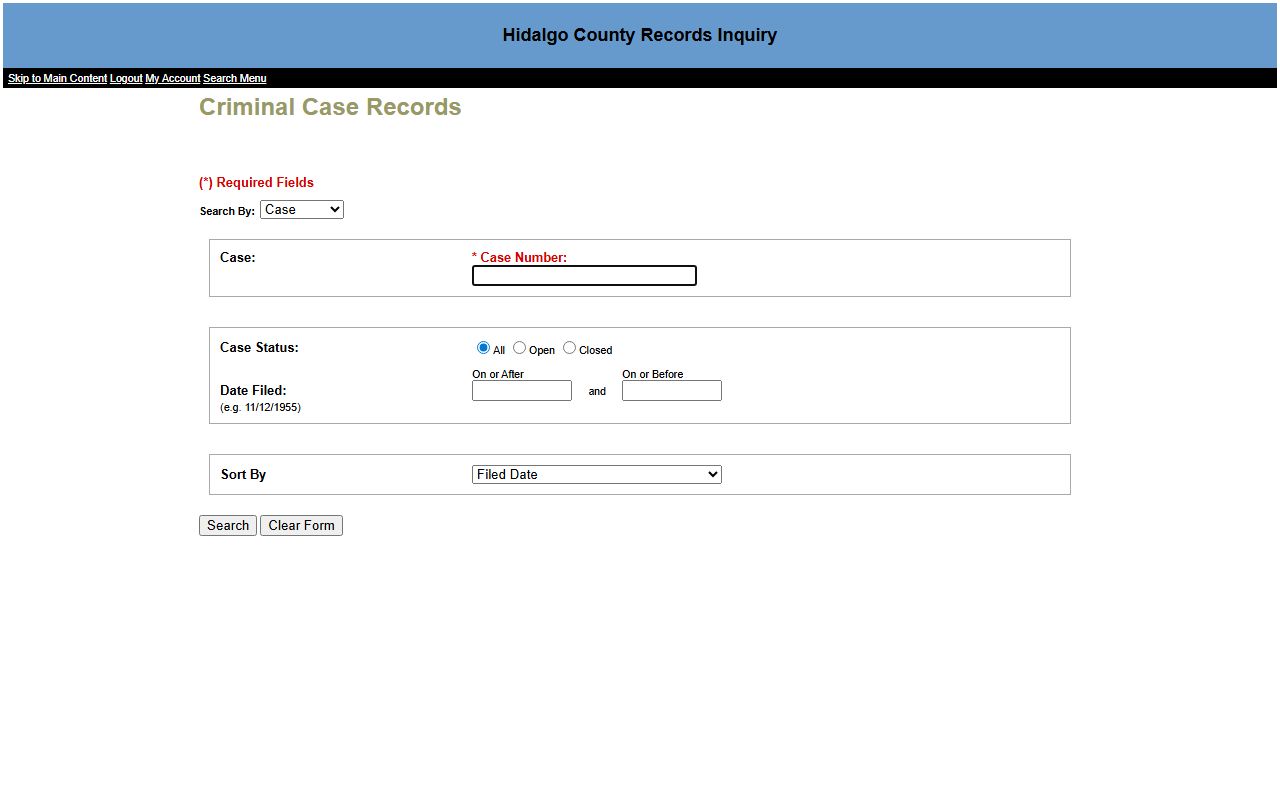
The same menu reaches court dockets through the Court Calendar lane.
Hidalgo County Court Records Search Fields
Each search lane offers the same core fields. You pick a mode first, then fill what that mode needs. Name searches allow a Soundex "sounds like" option and an exact-name option. Wildcards work only as a final character and have minimum length rules. The table below lists the key fields on the Hidalgo County court records search form.
| Field Label | Type | Required | Notes / Format |
|---|---|---|---|
| Search By | Dropdown | Yes | Case, Defendant, Citation, or Attorney. |
| Case Number | Text | In case mode | Max 30 characters; wildcard needs 4 non-dash characters. |
| Citation Number | Text | In citation mode | Max 30; wildcard needs at least 4 characters. |
| Last Name | Text | In name mode | Max 80; wildcard minimum 3 characters. |
| First Name | Text | In name mode | Max 40; wildcard minimum 1 character. |
| Middle Name | Text | No | Max 40; helps narrow common names. |
| Date of Birth | Date | No | Format like 11/12/1955. |
| Case Status | Radio | No | All, Open, or Closed. |
| Date Filed Range | Date | No | On or after and on or before. |
| Sort By | Dropdown | No | Case Number, Filed Date, Status, or Defendant Name. |
Attorneys can also search by bar number. If no case types are picked, the portal searches them all.
Criminal vs Civil, Family and Probate Searches
Pick the right lane or your search will come up empty. The criminal lane covers felony and misdemeanor cases. The civil, family, and probate lane covers lawsuits, divorces, estates, and guardianships. The District Clerk bulletin warns users to know whether they want a civil or a criminal case before they search.
The civil, family, and probate search uses the same form but labels the party field as Party or Defendant Name. The civil, family and probate search is shown below.
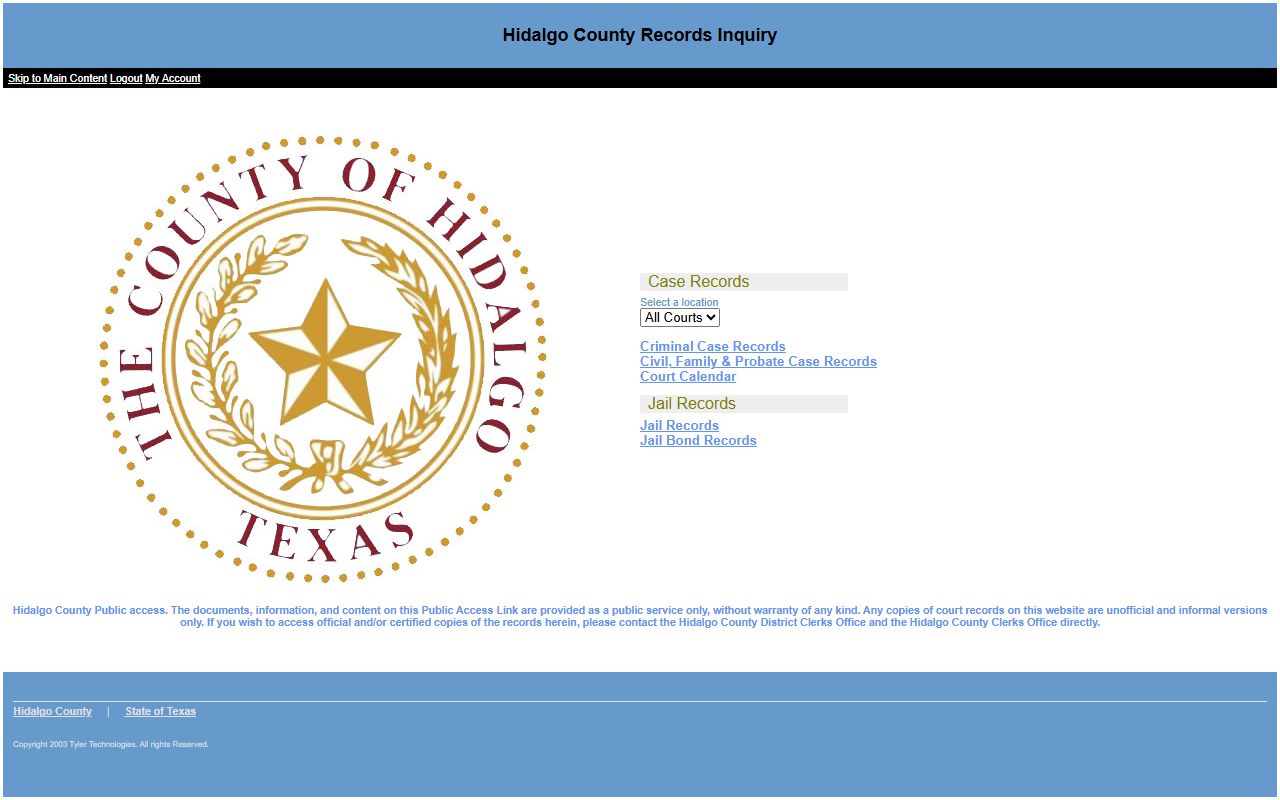
Remember that many family files, divorce among them, may not appear online at all. For those, contact the District Clerk.
Types of Hidalgo County Court Records
Hidalgo County court records span several case types. The court that made the file tells you which clerk holds it. District courts make felony and large civil records. County courts at law make misdemeanor and many family records. Justice courts make small claims, eviction, and traffic records.
The list below sums up the main types you can search.
- Criminal cases, from felony indictments to misdemeanor charges; see arrest records.
- Civil cases, such as contract, injury, and property suits.
- Family cases, including divorce, custody, and support.
- Probate cases, covering wills, estates, and guardianship; see probate records.
- Traffic and small-claims cases from the justice courts; see traffic court records.
What Hidalgo County Court Records Show
When you open a case, the portal shows a register of actions. That is a running summary of the file. The District Clerk has long described it as carrying the style of the case, the parties, the events and orders, and the financial history. The table below maps the common fields to what they tell you.
| Field | What It Shows |
|---|---|
| Case Number | The cause number that identifies the file. |
| Style of Case | The party names, such as State v. Doe. |
| Filing Date | When the case was opened with the clerk. |
| Parties and Attorneys | Plaintiff or state, defendant or respondent, and counsel. |
| Events and Orders | Hearings, motions, rulings, and settings. |
| Disposition | The outcome, like a plea, judgment, or dismissal. |
| Financial | Court costs, fines, bonds, and fees on the case. |
Note: Files holding Social Security numbers, driver license numbers, or child information may be held back from online view.
Public Access Framework for Hidalgo County Court Records
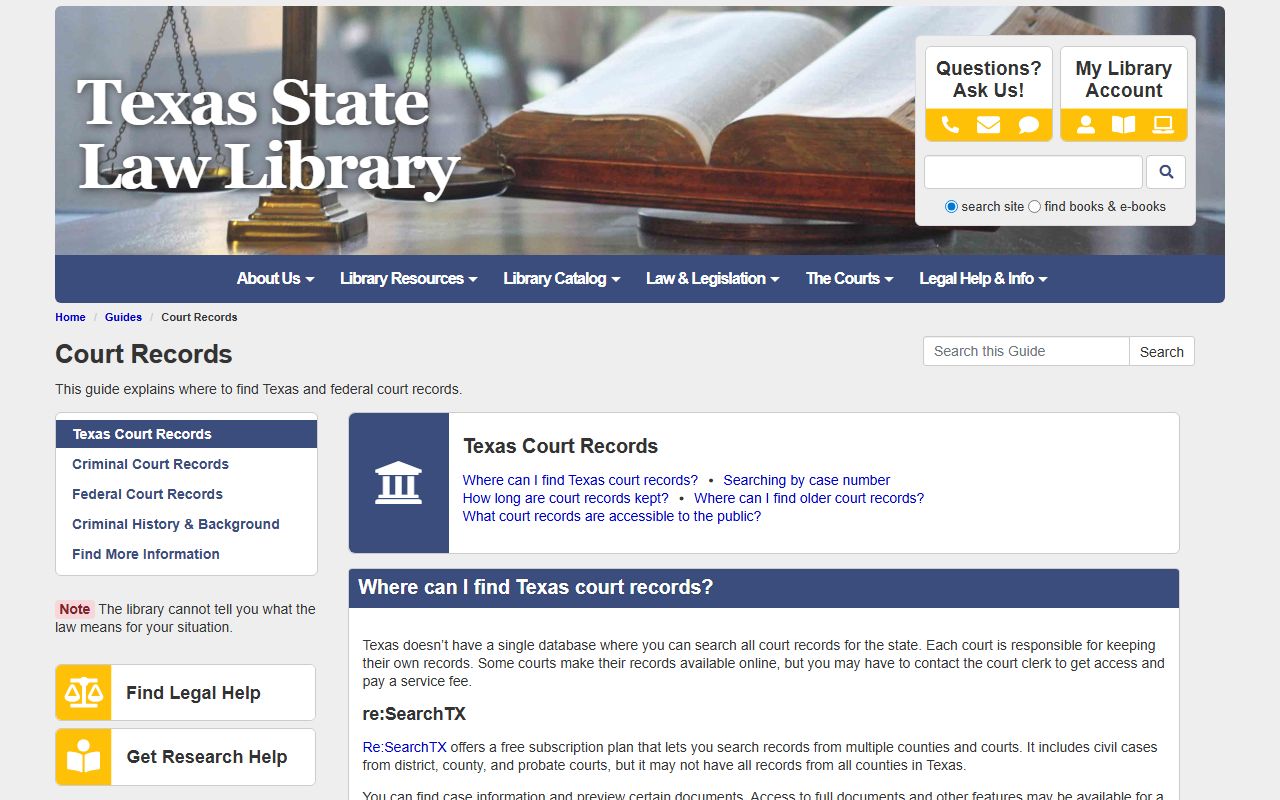
Court records and county administrative records follow different rules in Texas. County department files fall under the Texas Public Information Act, Government Code Chapter 552. Court case files do not. The Texas State Law Library guide states that court records are governed by common law, statutes, and court rules, and are not subject to the Public Information Act or federal FOIA.
So who can look? Almost anyone. Court records start out open, and you do not need a reason to view them. Fees apply for copies, and certified copies require a clerk. The Texas State Law Library court records guide is shown below.
Note: A statute like Texas Government Code § 552.101 lets the county withhold records that other law makes confidential.
Records That Are Sealed or Confidential in Hidalgo County
Some Hidalgo County court records stay closed. Juvenile files are limited by state law. Many divorce and family cases hold sensitive data and may not be online. Mental health commitment files from the probate court are largely confidential. Adoption files are sealed. Personal identifiers are redacted from public view.
To open a sealed civil record, you usually need a court order. Texas Rule of Civil Procedure 76a sets the test for sealing. A criminal record can be erased through expunction under Code of Criminal Procedure Chapter 55, or limited through a nondisclosure order under Government Code Chapter 411. You file the petition in the court that handled the case.
In-Person and Certified Copy Requests
Online copies are informal. For court use, you need certified copies from the clerk. The District Clerk says email is the quickest way to get noncertified copies; you complete a copy request form and pay before processing. Certified copies can be mailed or held for will-call pickup within five days. The card below has the District Clerk address and hours.
Hidalgo County District Clerk
100 N. Closner
Edinburg, TX 78539
(956) 318-2200
Mon-Fri 8:00 a.m. to 5:00 p.m.
Electronic copies cost $1 for up to 10 pages, plus $0.10 for each page over 10. Mail requests go to PO Box 87, Edinburg, TX 78540.
Search Tips for Hidalgo County Court Records
A few habits make the portal faster and cut down on dead ends. The District Clerk bulletin says the easiest way to find a case is by case number, and that name searches work when the number is unknown. The form gives you tools to refine a name search, but each has rules worth knowing before you type.
- Use the case number when you have it; it is the cleanest match.
- Turn on Soundex to catch names that sound alike but are spelled differently.
- Use the exact-name option to cut a long list of common names.
- Add a date of birth or driver license number to narrow a person search.
- Set case status to Open or Closed to focus the result set.
Wildcards work only as a final character and need a minimum of three letters for a last name. If a search returns nothing, widen it by dropping the middle name or the date filters first.
Common Questions About Hidalgo County Court Records
Two questions come up most when people first use the portal. The short answers help you set the right expectation.
Are the online copies official? No. The portal disclaimer states its records are unofficial and informal. For an official or certified copy, contact the clerk that holds the file.
Why can't I find a divorce case? Many family cases hold sensitive data or child information and may be kept offline. Ask the District Clerk about access, or see the marriage and divorce records page. More answers sit on the FAQ.
Federal Court Records Tied to Hidalgo County
Not every case in the county is a state matter. Hidalgo County sits in the Southern District of Texas, which runs a McAllen Division. Federal criminal, civil, immigration, and civil-rights cases are heard there rather than in the county courthouse. Those files do not appear in the county Records Inquiry portal at all, so a search that comes up empty may simply mean the case is federal.
Federal dockets and documents live on PACER, the national court records system. The PACER federal records portal is shown below.
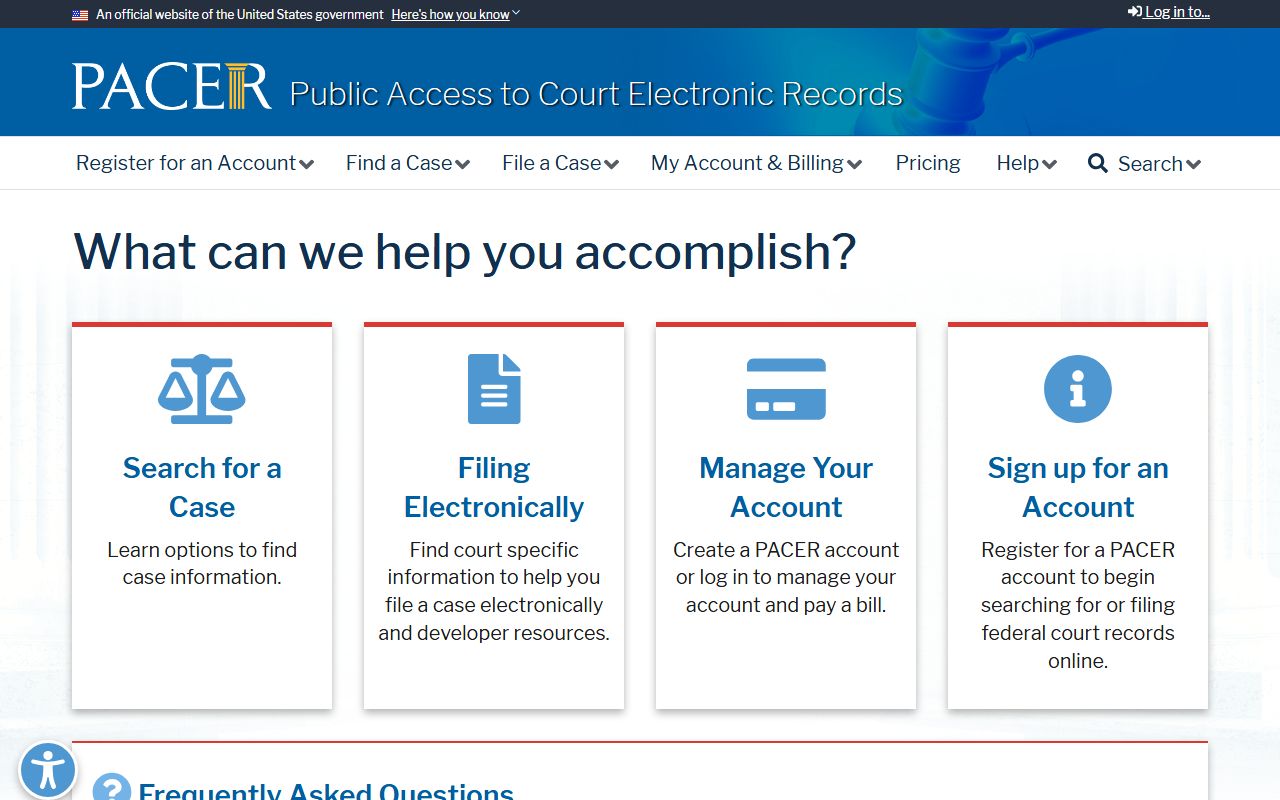
PACER may charge per-page fees, though waivers exist. Appeals from the district court go to the U.S. Court of Appeals for the Fifth Circuit. For free access to many federal opinions, CourtListener is a useful alternative, but certified federal records still come from the court. Keep federal and state lanes separate when you hunt for a case.