
The Texas Public Information Act and Hidalgo County
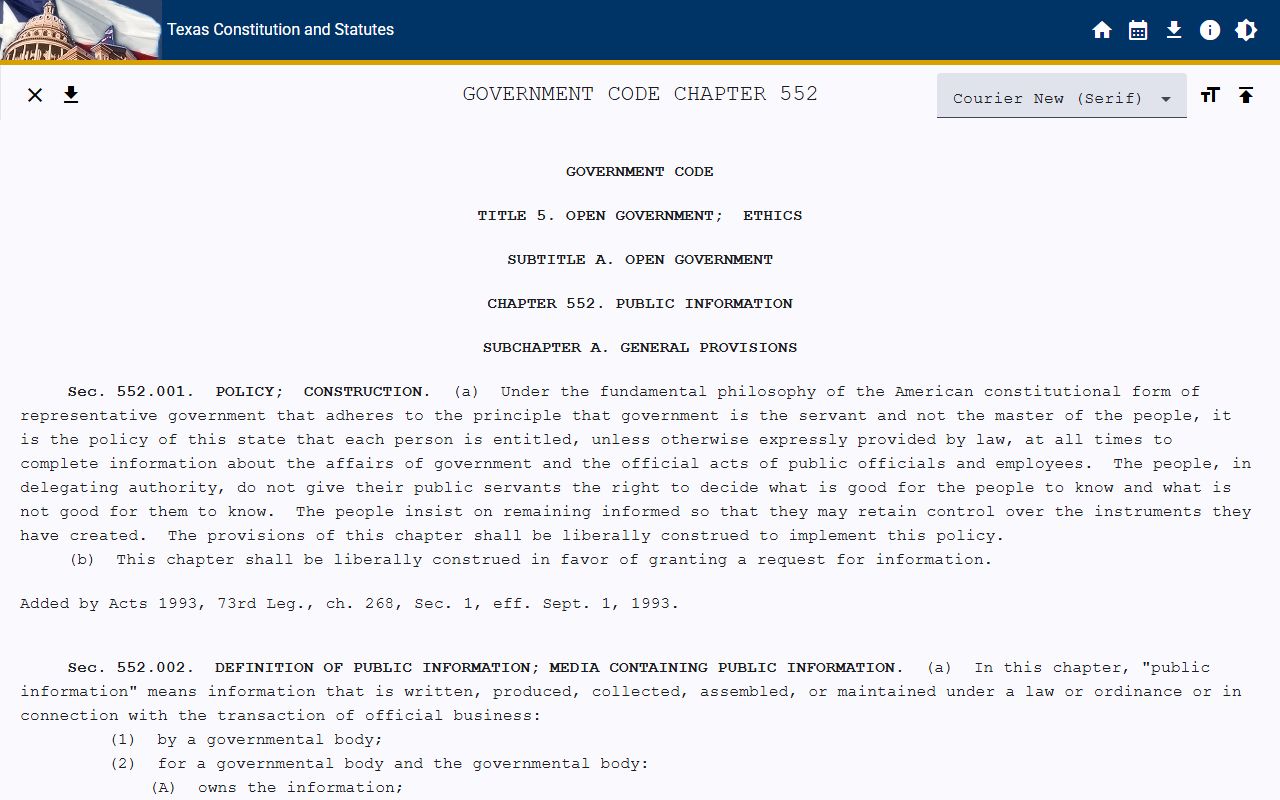
The Texas Public Information Act, found in Government Code Chapter 552, is the backbone of public records access in the state. Its policy is plain: each person is entitled, unless other law says otherwise, to complete information about the affairs of government and the official acts of public officials. That covers emails, electronic files, and paper records held by county departments.
The Act defines public information broadly and makes it available on request. Some categories are confidential and can be withheld, but the default is openness. The Texas Public Information Act, Chapter 552 is shown below.
The Hidalgo County Open Records Division
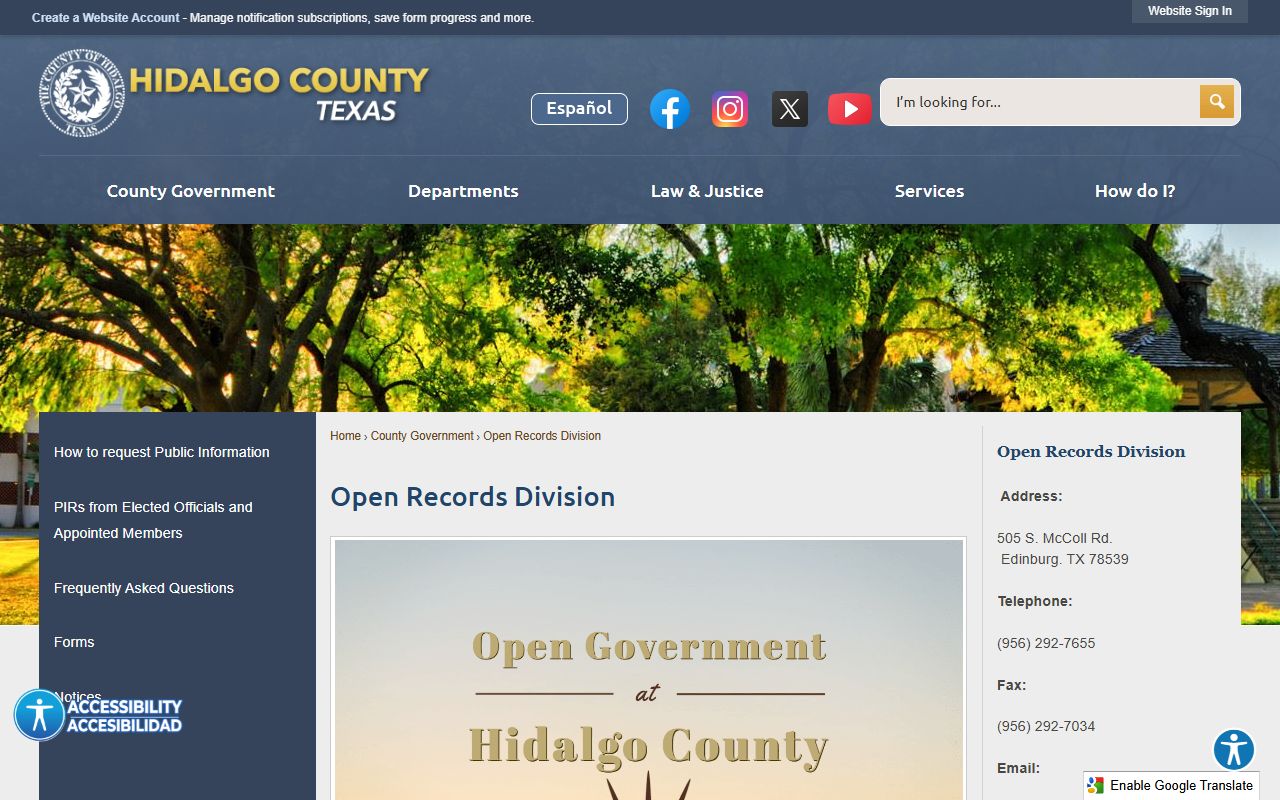
The county routes many public information requests through its Open Records Division. The division processes requests for county departments and helps point requesters to the right custodian. It is important to know that each elected official is the custodian of their own records, so a request sometimes belongs to a specific office rather than the division.
Hidalgo County Open Records Division
505 S. McColl Rd., Suite J
Edinburg, TX 78539
(956) 292-7655
open.records@co.hidalgo.tx.us
The Open Records Division page is shown below.
How to File a Public Records Request
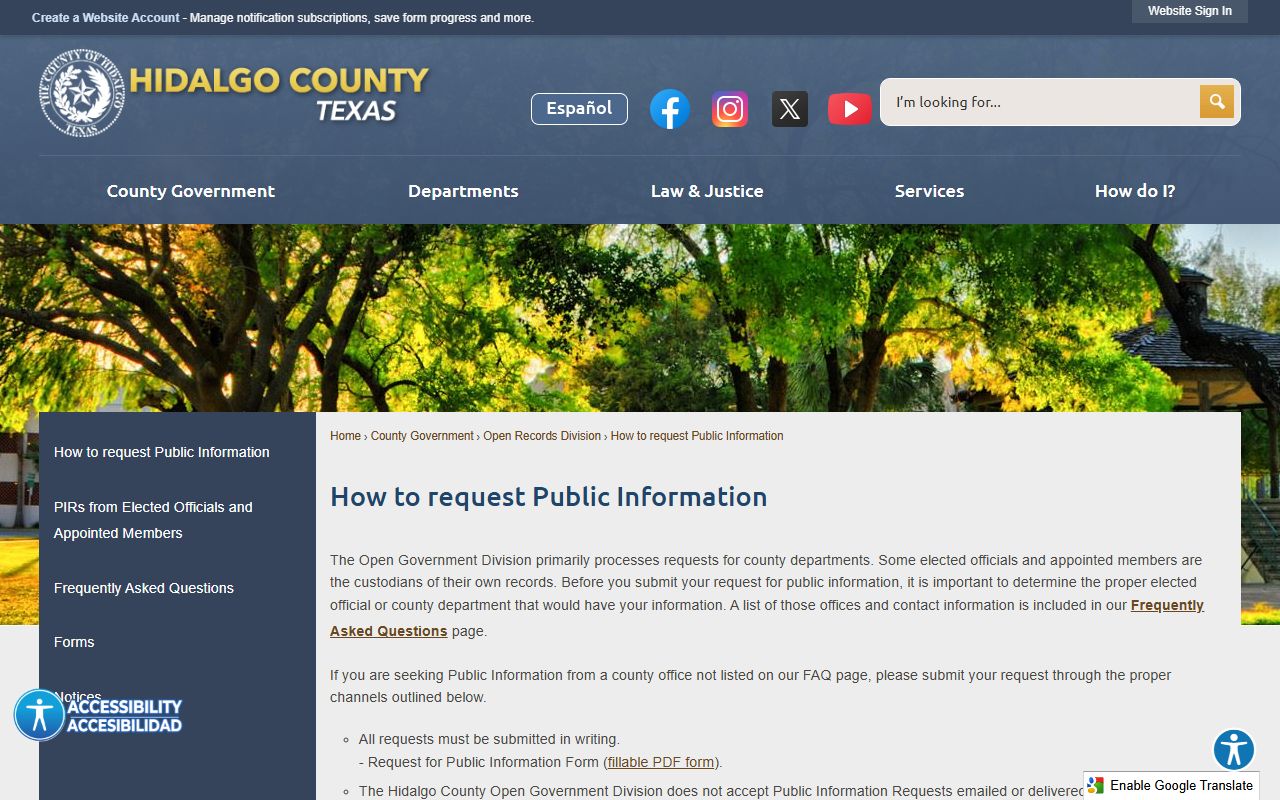
A public records request in Hidalgo County must be in writing, but it does not have to use the county form. The Act only requires a written request. The county lists several ways to submit one, and a few habits make a request easier to fill. Follow the steps below.
- Put the request in writing; the county form is optional.
- Describe the records clearly, with names, dates, and subject matter.
- Ask only for records that already exist; the county need not create new ones.
- Send it by email to open.records@co.hidalgo.tx.us, by fax, in person, or by mail.
- Watch for a response and any fee estimate before the county fills it.
The how to request public information page is shown below.
Public Information Request Form Fields
Using the county form is optional, but it shows what a complete request includes. The table below lists the fields on the Hidalgo County public information request form.
| Field | Required | Notes |
|---|---|---|
| Date of Request | Yes | The date you submit. |
| Name of Requester | Yes | Person asking for the records. |
| Company | No | If you are requesting for a business. |
| Mailing Address | Yes | Address, city, state, and ZIP. |
| Phone and Email | Yes | So the county can reach you. |
| Request Detail | Yes | Names, documents, locations, and dates of the records. |
Clear detail in the request field is the single best way to speed up a response.
Fees and Processing
Public records are not always free. State law lets the county charge for copies, and a large request can carry a fee estimate. The Act does not require the county to do legal research, answer questions, or build a record that does not exist. The table below lists common copy and certification fees you may meet.
| Item | Amount |
|---|---|
| Copies per page | $1.00 |
| Certification | $5.00 |
| Records search fee | $5.00 |
| Large request | Fee estimate billed under state law |
Note: Ask for a cost estimate up front if your request is broad, so a large bill does not surprise you.
Court Records vs Public Information Act
This is the trap that catches many requesters. Court case records and county administrative records follow different rules. The Texas State Law Library says court case records are governed by common law, statutes, and court rules, not the Public Information Act or federal FOIA. County department records are the ones that fall under the Act. The chart below sorts them out.
| Point | Court Case Records | County Public Records |
|---|---|---|
| Governed by | Common law and court rules | Public Information Act, Ch. 552 |
| Where to ask | District or County Clerk | Open Records Division or custodian |
| Examples | Case files, dockets, dispositions | Contracts, budgets, emails |
For case files, use the court records search rather than a public information request.
What the County Clerk Keeps Beyond Courts
Many public records people want are not court files at all. The County Clerk keeps real property records, like deeds and liens, along with business filings such as assumed names, and vital records including marriage, birth, and death. The county notes that its land records are available online for searching, viewing, printing, and downloading. So a deed or a DBA search runs through the clerk, not the open records process.
For those record types, see the County Clerk page. For marriage and vital records, see the marriage and divorce records page.
Elected Officials as Record Custodians
One feature of Texas county government shapes every public records request: power is spread across many separately elected officials, and each is the custodian of their own records. Hidalgo County has 47 elected officials, including the County Judge, four commissioners, the County Clerk, the District Clerk, the District Attorney, the Sheriff, the Tax Assessor-Collector, the Treasurer, the Probate Judge, and a long bench of court judges, justices of the peace, and constables. Each office holds its own files.
That structure means a request sometimes belongs to a specific office rather than the Open Records Division. A request for sheriff records, court records, or tax records may be best aimed at that custodian directly. The county itself warns requesters to identify the proper elected official or department, because the right custodian can fill a request faster than a general intake point. When you are not sure who holds a record, the Open Records Division can help point you in the right direction.
Response Timelines Under the Act
The Public Information Act runs on a promptness standard rather than an open-ended timeline. A governmental body must produce public information promptly, and if it believes a record is excepted, it generally has to seek a ruling from the Texas Attorney General within a set number of business days. That referral process is why some responses take longer than a simple copy job: the county may be waiting on a legal ruling before it can release or withhold.
You can help the clock by writing a clear, specific request. A vague ask forces the county to seek clarification, which restarts the timing. Naming dates, people, and document types narrows the search and speeds the response. If a request is large, the county may give a cost estimate before it begins, and the timing can pause until you agree to the charges. For court files, which sit outside this process, use the court records search instead.
Tips for a Successful Public Records Request
The difference between a fast response and a slow one often comes down to how the request is written. Specific beats broad every time. Instead of asking for everything a department has on a topic, name the records you want, the people or addresses involved, and a tight date range. A focused request is easier to search, cheaper to copy, and less likely to trigger a long review. It also reduces the chance the county comes back asking you to clarify, which only restarts the clock.
A few more habits help. Send the request to the right custodian, since aiming a sheriff or court request at the wrong office wastes time. Ask for a cost estimate before a large request so a bill does not surprise you. Keep a copy of what you sent and the date. And remember the line between record types: a county contract or email is a public information request, while a court case file is a clerk request. For case files, the court records search is the right starting point.
Confidential Records and Redactions
Openness has limits. The Act lets the county withhold information that other law makes confidential under Government Code § 552.101, such as certain juvenile, health, and law enforcement material. Personal identifiers like Social Security numbers, driver license numbers, and credit card numbers are protected under specific sections and are redacted before release.
If the county withholds a record, it may have to seek a ruling from the Texas Attorney General before it can refuse to release the information. You can ask why a record was withheld and what exception applies, and the response should point to a specific section of law. Even when part of a record is confidential, the rest may still be released with the protected details redacted. For more on sealed and confidential court files, see the court records page, and for common questions, the FAQ.