
How to Search Hidalgo County Traffic Court Records
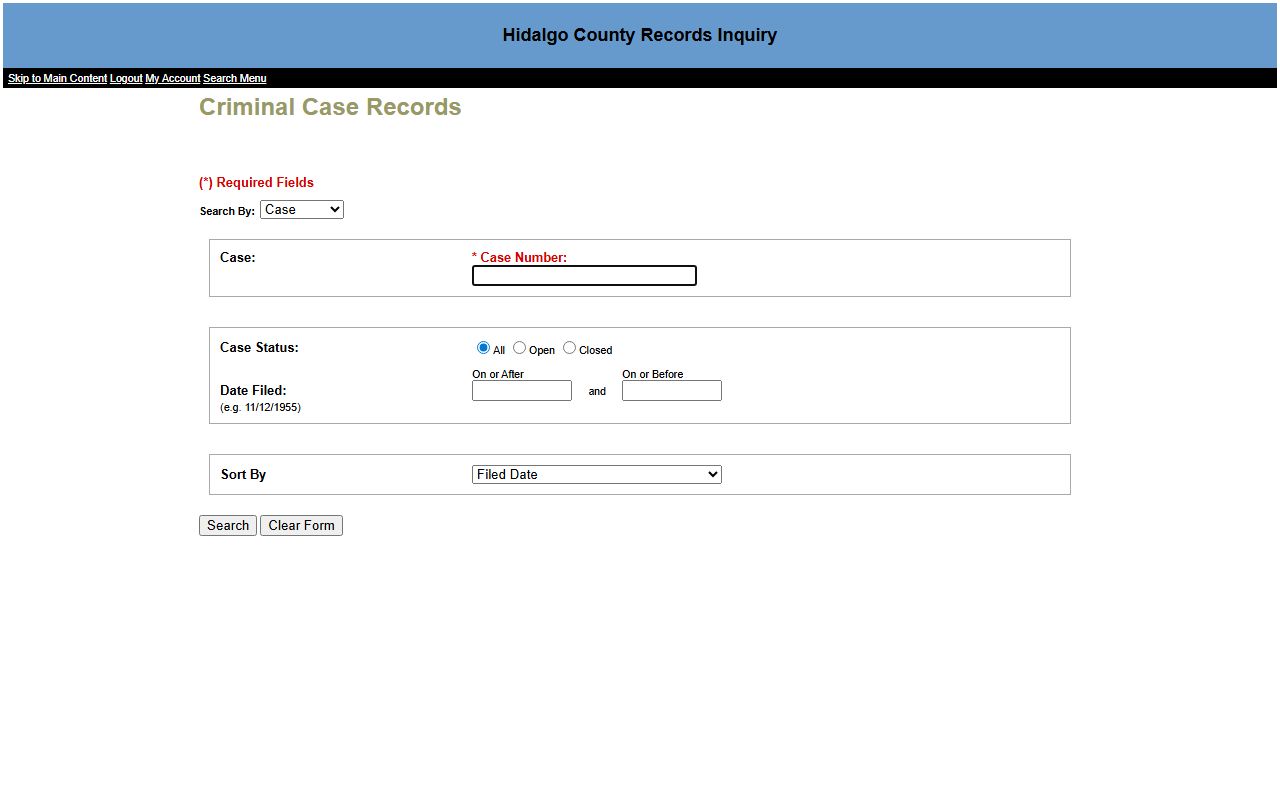
Traffic records do not all sit in one place, so the first step is to find the right court. Tickets written in an unincorporated area or by the sheriff often land in a justice of the peace court. Tickets written inside a city usually go to that city's municipal court. The county Records Inquiry portal can surface many county-level matters, and its criminal case search includes a citation mode for looking up a ticket by its number.
Start with the citation itself, which lists the court and a citation number. If you have that number, the search is quick. If you do not, you can search by name. The steps below set the order to follow for a Hidalgo County traffic record.
- Read the citation to find the court and the citation number.
- Open the county Records Inquiry portal and choose the criminal case search.
- Set the mode to Citation and enter the number, or search by name.
- If the ticket is in a municipal court, search that city's court instead.
- Note the court date, plea options, and any warrant status.
The county criminal case search includes the citation lookup. The Hidalgo County citation and case search is shown below.
Which Courts Handle Traffic Cases in Hidalgo County
Three kinds of courts touch traffic in the county, and the split decides where a record lives. Justice of the peace courts handle Class C, fine-only matters and citations in their precincts, and Hidalgo County has nine of them across five precincts. Municipal courts handle tickets written inside city limits for city ordinance and fine-only traffic offenses. District courts come into play only when a driving offense rises to a crime, such as a felony DWI.
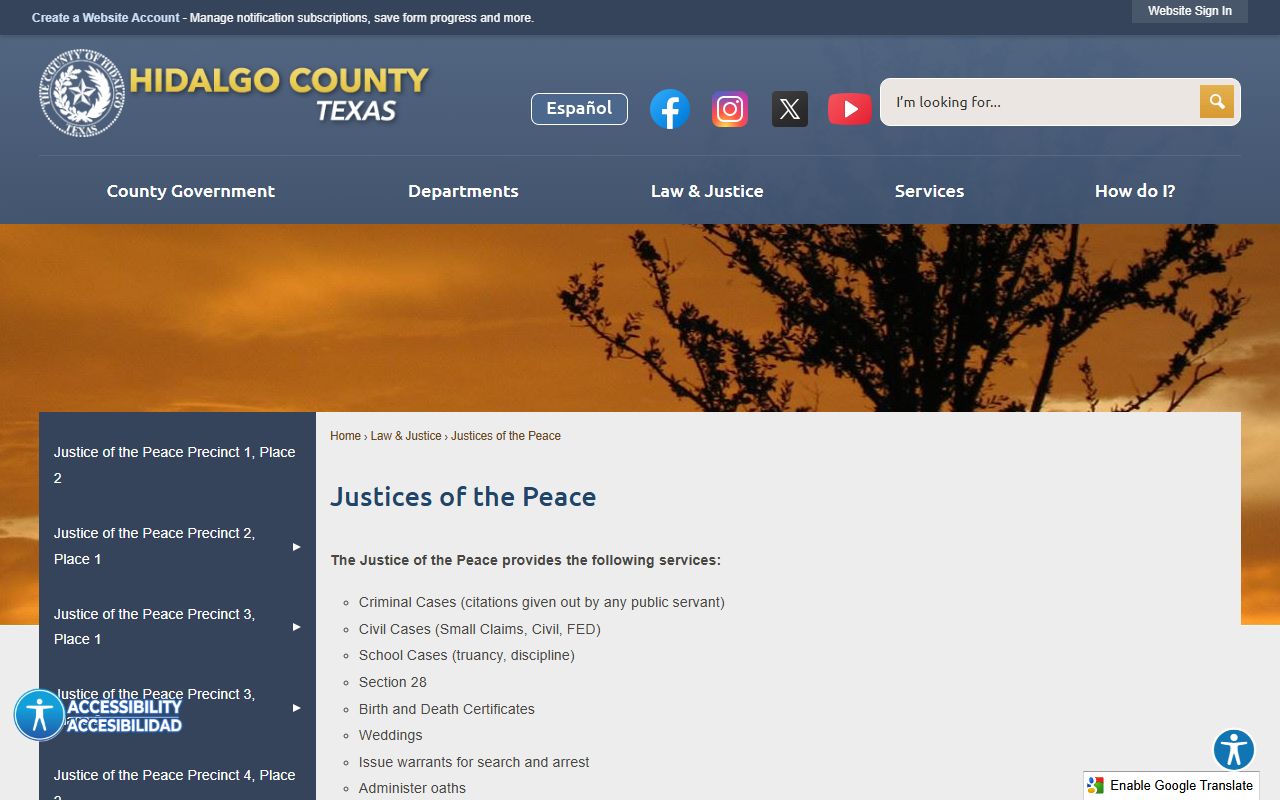
That geography matters. The JP precincts map onto the county: Weslaco and the east, Pharr and the south, Mission and the west, Edinburg and the north, and the Delta area. The Hidalgo County justice of the peace page is shown below.
Types of Traffic Cases on Record
Most traffic matters are fine-only Class C offenses, but the range is wider than people expect. The list below covers the common types you will see in Hidalgo County traffic court records.
- Speeding and other moving violations.
- Equipment and registration offenses.
- No insurance or no driver license citations.
- Red-light and stop-sign violations.
- Serious driving crimes like DWI, which route to criminal court.
The line between a fine-only ticket and a crime matters for your record. A speeding ticket is a Class C matter. A DWI is a criminal case that follows a very different path through the courts.
What Hidalgo County Traffic Court Records Show
A traffic court record traces a single citation through the court. It shows the charge, the dates, the plea, and the result, along with any payment or warrant activity. The table below maps the common fields to what they tell you.
| Field | What It Shows |
|---|---|
| Citation Number | The number that identifies the ticket. |
| Offense | The traffic charge and the statute cited. |
| Court Date | The setting for appearance or plea. |
| Plea | Guilty, not guilty, or no contest. |
| Disposition | The result, such as paid, dismissed, or convicted. |
| Warrant Status | Any capias or capias pro fine for nonpayment. |
Note: A capias pro fine can issue when a fine goes unpaid, so an old ticket can turn into a warrant if it is ignored.
Searching by Citation Number vs by Name
The county case portal lets you search a traffic matter two ways, and each has a place. A citation search is exact and fast when you have the number off the ticket. A name search is the fallback when the citation is lost. The table below lists the key fields for a Hidalgo County traffic record search.
| Field Label | Type | Notes / Format |
|---|---|---|
| Search By | Dropdown | Set to Citation for a ticket number. |
| Citation Number | Text | Max 30 characters; wildcard needs 4 characters. |
| Last / First Name | Text | Fallback when the citation number is unknown. |
| Date of Birth | Date | Narrows a name search. |
| Case Status | Radio | All, Open, or Closed. |
If the ticket is in a municipal court, that court may run its own lookup separate from the county portal.
Paying or Contesting a Hidalgo County Traffic Ticket
You have choices with a ticket, and the right one depends on your goal. Paying admits the offense and closes the case, but a conviction can hit your driver record and insurance. Contesting keeps the case open for a hearing. The county lets some JP courts take payments online at pay.hidalgocounty.us, and offices accept money orders and cards in person. The steps below outline the path.
- Find the issuing court and your citation number.
- Decide whether to pay, request a hearing, or ask about a course.
- Act before the deadline to avoid a warrant for nonpayment.
- To contest, set a hearing date and appear or hire counsel.
- To resolve, pay online where allowed or by money order or card.
Important: Ignoring a ticket can lead to a capias pro fine warrant and added costs, so contact the court before the deadline passes.
Public Access Laws for Traffic Court Records
Traffic court records follow the same general rule as other court case records in Texas. The Texas State Law Library explains that court case records are governed by common law, statutes, and court rules, not the Public Information Act or federal FOIA. So a fine-only traffic case is generally open to the public, and you do not need a reason to look it up.
Limits still apply. Personal identifiers like a driver license number are protected under Government Code § 552.130, and a court can restrict access in special circumstances. Juvenile traffic matters carry their own confidentiality. For the broader access framework, see the public records page.
Court Traffic Records vs State Driver Records
This is the distinction people miss most. The court traffic record and the state driver record are two different files kept by two different agencies. The court record is the case in the JP or municipal court. The driver record is the history the Texas Department of Public Safety keeps on your license. The chart below sorts them out.
| Point | Court Traffic Record | State Driver Record |
|---|---|---|
| What it is | The court case for a citation | Your license and violation history |
| Kept by | JP or municipal court | Texas DPS |
| Where to access | County or city court portal | Texas DPS driver record system |
| How to fix an error | Through the court | Through DPS |
A conviction in the court record can post points or surcharges to the DPS driver record, which is why the outcome of a ticket matters beyond the fine.
CDL and Commercial Driver Records
Commercial drivers face tougher rules, and a traffic case can hit a livelihood, not just a wallet. A commercial driver license holder generally cannot use the same dismissal tools that other drivers use to keep a violation off the record. Federal and state rules treat certain violations as serious for CDL holders, and convictions can lead to disqualification even when the offense happened in a personal vehicle.
Because the stakes are higher, a CDL holder with a Hidalgo County ticket should think carefully before simply paying it. Paying is a conviction, and a conviction can carry CDL consequences that a fine alone does not capture. When a job depends on a clean record, talking to the court or a lawyer before resolving the ticket is the safer move.
DUI and DWI Cases
Driving while intoxicated is not a traffic ticket. It is a criminal offense, and it leaves the traffic court system. A DWI in Hidalgo County is filed as a misdemeanor or, in serious cases, a felony, which routes it to a county court at law or a district court. That means the record sits with the criminal courts and the clerks who hold criminal files, not the JP traffic docket.
Because a DWI is criminal, it can involve arrest, booking, and bond, and it follows the criminal case path. For the arrest and case side of a DWI, see the arrest records page, and to search the case file, use the court records tool.
Deferred Adjudication and Defensive Driving
Texas gives many drivers a way to keep a ticket off the record. A defensive driving course can lead a court to dismiss a citation, which avoids a conviction on the driver record. Deferred disposition is another path: the court holds the case while the driver stays out of trouble for a set period, and the charge is dismissed if the conditions are met. Both can protect insurance rates and a clean record.
These options come with rules and deadlines, and not every ticket or driver qualifies. CDL holders, in particular, often cannot use them. The issuing court decides eligibility, so ask the JP or municipal court whether a course or deferred disposition is available before you simply pay. Paying a ticket outright is a conviction and gives up these choices.
Sealing or Expunging Traffic Records
Once a traffic case closes, you may want it off the public record. Texas offers expunction under Code of Criminal Procedure Chapter 55 and nondisclosure under Government Code Chapter 411. Expunction erases a qualifying record, while nondisclosure seals it from the public. Eligibility is narrow and statute-specific, and a simple paid Class C conviction may not qualify, though a dismissed or deferred matter can in some cases.
You file the petition in the court that handled the case. The Texas State Law Library guide on expunctions and nondisclosure is a useful starting point, and the steps overlap with clearing other minor records. For how this works for criminal matters, see the arrest records page.
Fees for Traffic Record Copies
Searching a traffic case online is free, but copies and certified records carry fees set by the court or clerk. The table below lists common copy fees you may meet for a Hidalgo County traffic record. The fine itself is separate and depends on the offense and the court.
| Item | Amount |
|---|---|
| Copies per page | $1.00 |
| Certification | $5.00 |
| Records search fee | $5.00 |
| Traffic fine | Set by offense and court |
For certified copies of a court file, the clerk that holds the case is the source. See the District Clerk page for the copy process, and the FAQ for more answers.